CHOISISSEZ VOTRE CLINIQUE

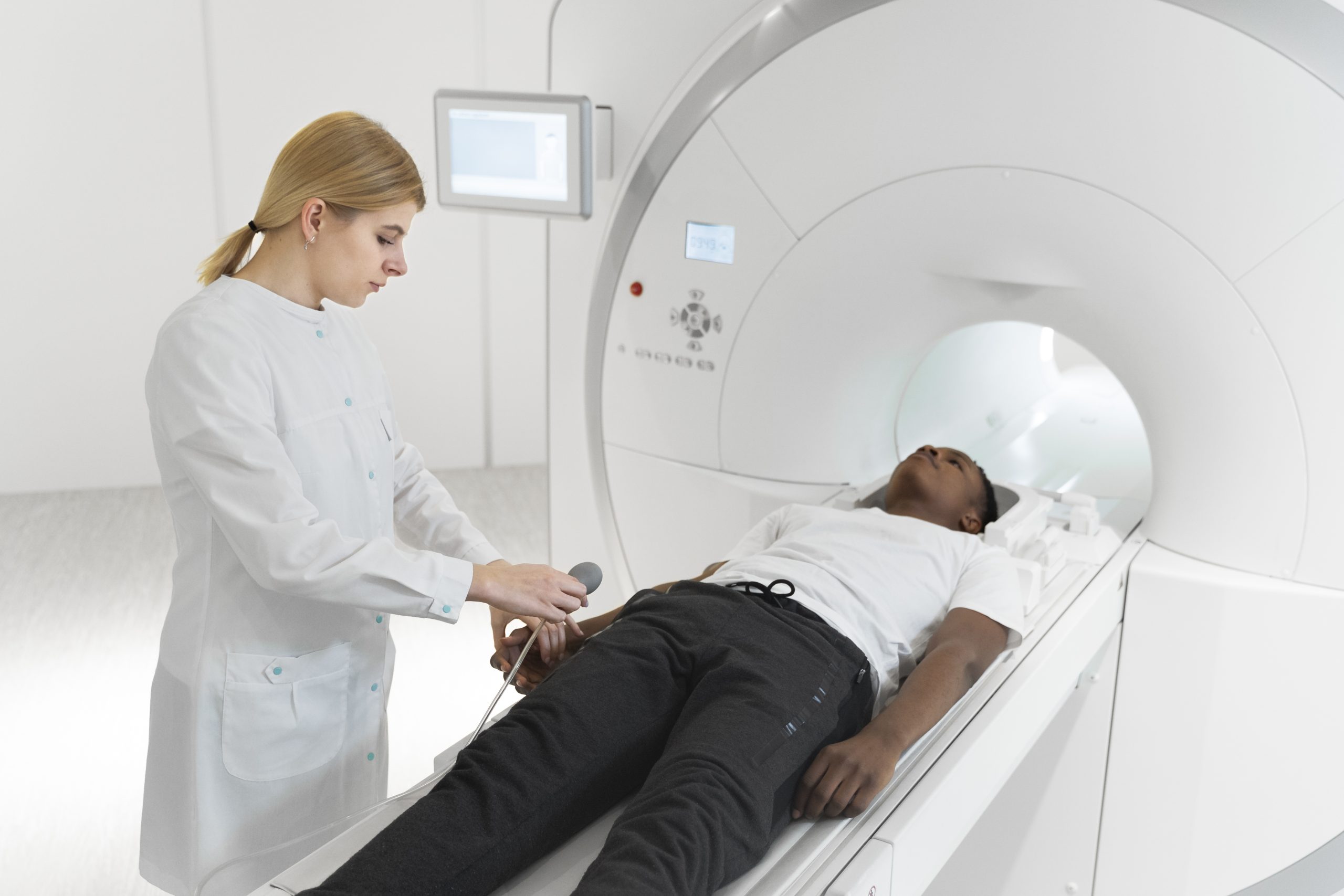
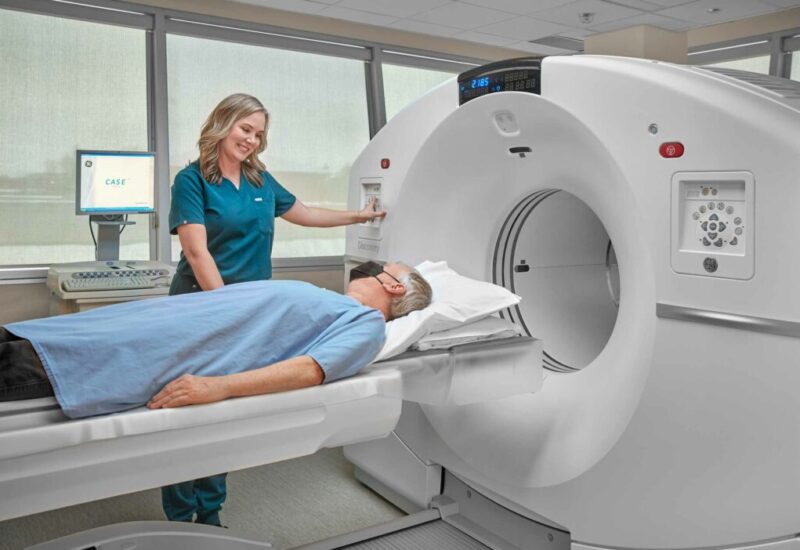
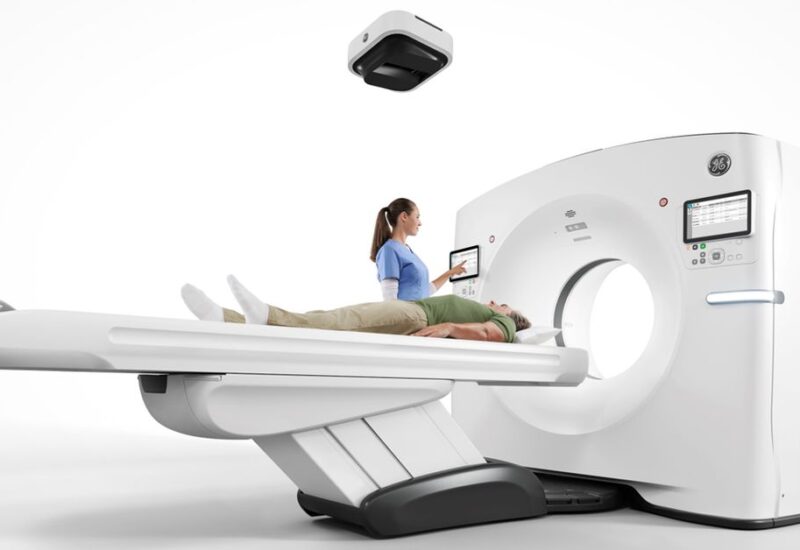
CT imaging can detect health issues, such as lung cancer, cardiovascular conditions, and neurological emergencies, by creating detailed, 3D pictures of your organs, bones, and tissues. It increases the chances of preventing life-threatening diseases and is considered a proactive screening modality.
Computed tomography or CT imaging helps to detect health issues early by using a series of X-rays and providing a special computer-created detailed image of your bones, organs, and tissue.
| Features | CT Scan | X-Rays |
| Type of image | Detailed, 3D images. | Flat, 2D images. |
| Radiation dosage | Higher because they are created by compiling 100 X-ray images. | Lower than CT scan images. |
| Procedure time | 10 to 30 minutes. | Only a few seconds. |
| Usage | CT scans are used to diagnose complex internal trauma, cancer, and organ diseases. | X-rays are used to diagnose basic fractures. |
Table: Difference between CT scan and normal X-ray
Early-stage CT imaging is a type of preventive healthcare method that assists in detecting a health condition early to prevent the potential life risk.
Blocked arteries, an aortic aneurysm, and blood clots are some life-threatening cardiovascular conditions. An early CT scan can prevent a heart attack or coronary artery disease caused by these issues. Computed tomography can accurately measure coronary artery calcium (CAC) by using a CT scanner. Early detection allows the doctor to control the condition by aggressive statin therapy, lowering LDL-C target, and a personalized treatment plan.
A Low-Dose CT helps to detect the early stage of lung cancer by capturing detailed, 3D, and cross-sectional images. A CT scan can detect tiny spots on the surface of the lungs before any medical symptoms appear.
Persistent cough, shortness of breath, and chest pain are the common symptoms of lung cancer. But, diseases like lung cancer usually do not exhibit any particular symptoms before it reaches the advanced stage. Here, a simple CT scan can be your life savior.
An LDCT scan creates a detailed image of your lungs, and if your doctor spots tiny tumors on its surface, it could be the sign of an early stage of lung cancer.
To detect and prevent colorectal cancer and polyps at the early stage, a non-invasive CT scan is required. CTC or CT colonography is a painless process that requires no sedative or anesthesia.
This specific medical imaging can capture the entire picture of the abdomen and pelvis, so if you have developed a kidney, liver, or pancreas issue, that can be captured by the CTC.
People who are above 45 and have a family history of colorectal cancer should initiate a health screening after 45 to detect and prevent early-stage colorectal cancer.
While CT scans are great for detecting life-threatening diseases at an early stage, it has some disadvantages as well. Let’s discuss the benefits first.
To get a CT screening done in Canada, you should keep some aspects in mind.
In Canada, you are not eligible to get a diagnostic imaging without having a proper medical requisition. It is basically the approval from your doctor. Your doctor knows well which parts of your body might need a CT scan and why. To avoid unnecessary radiation exposure, all public and private health sectors in Canada require a proper medical requisition to get a CT scan done.
In Canada, the waiting time to get an appointment is longer than in the private healthcare system. It could take 6 to 12 months to get an appointment in the public hospital network. The long waiting time could be inconvenient for patients with serious medical conditions. The private healthcare system takes less time than the public system to get an appointment. People often opt for private clinics to avoid the long waiting queues. In DiagnostiX, we offer rapid access to medical imaging and treatments without wasting your valuable time.
While in the public health sector, almost all the medical expenses are covered by RAMQ (Régie de l’assurance maladie du Québec) for all residents in Quebec. Private healthcare systems charge the patient out-of-pocket or through private insurance for offering different types of services. So, financial knowledge about the healthcare service is important to keep in mind to avoid unexpected costs.
If you are in Canada and want to get a CT scan done, contact DiagnostiX by calling us at 438-858-8611 to book an appointment. We have branches at West Island, Montreal, Gatineau, Laval, South Shore, Saint-Jean-Sur-Richelieu, and the Town of Mount Royal. You can visit one as per your convenience.
A CT screening aims to detect the hidden symptoms of a disease in the apparently healthy patient, whereas A diagnostic CT is reactive, ordered to investigate specific symptoms, monitor existing conditions, or stage an identified disease.
The radiation dose of a modern preventative CT scan is quite safe. For most preventative scans, the effective dose is typically between 1.5 and 10 mSv, which equates to about 6 months to 3 years of natural background radiation.
If an unexpected finding (an incidentaloma) is discovered, such as small kidney cysts, benign liver hemangiomas, or stable lung nodules are completely harmless and require nothing more than periodic monitoring.
No, preventative CT scans are not covered by provincial health insurance. Diagnostic CT scans, if they are deemed a medical urgency, are covered by public health insurance.